
A product being ready for shelves does not necessarily mean the business is ready for its launch campaign. Before committing significant investment, businesses need to clarify which customer segments should be prioritized, why those customers should choose the product, and what evidence will justify further investment.
The campaign plan is ready, but are the choices clear enough?
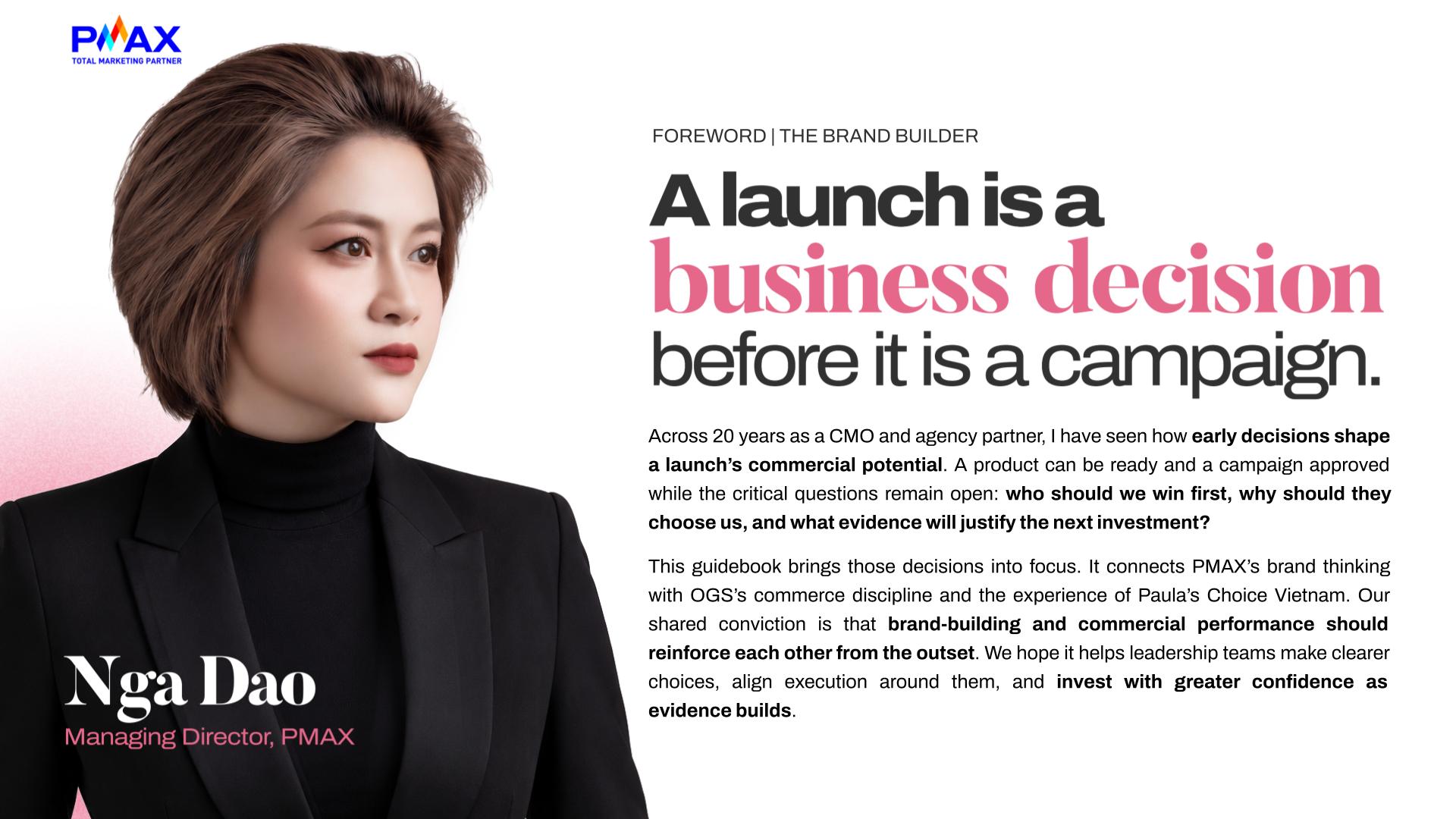
Ms.Nga Dao, Managing Director at PMAX shared: The product is complete, the campaign has been approved, and the budget is ready. Over nearly two decades of working on both the brand side and the marketing agency side, I have encountered many product launch plans that appeared just as “complete.” However, upon closer examination, three critical questions still needed to be clarified beyond the bullet points in the plan:
- Which customer segment should we prioritize during the product launch?
- Why should this customer segment choose our product over the familiar products they are currently using?
- And what post-launch evidence will tell us whether further investment is justified?
The answers give the teams responsible for creative, media, and sales a shared direction. Without that alignment from the start, each function may execute its own work well while the campaign as a whole moves in different directions. The business is then left without a clear basis for deciding whether and how to invest further.
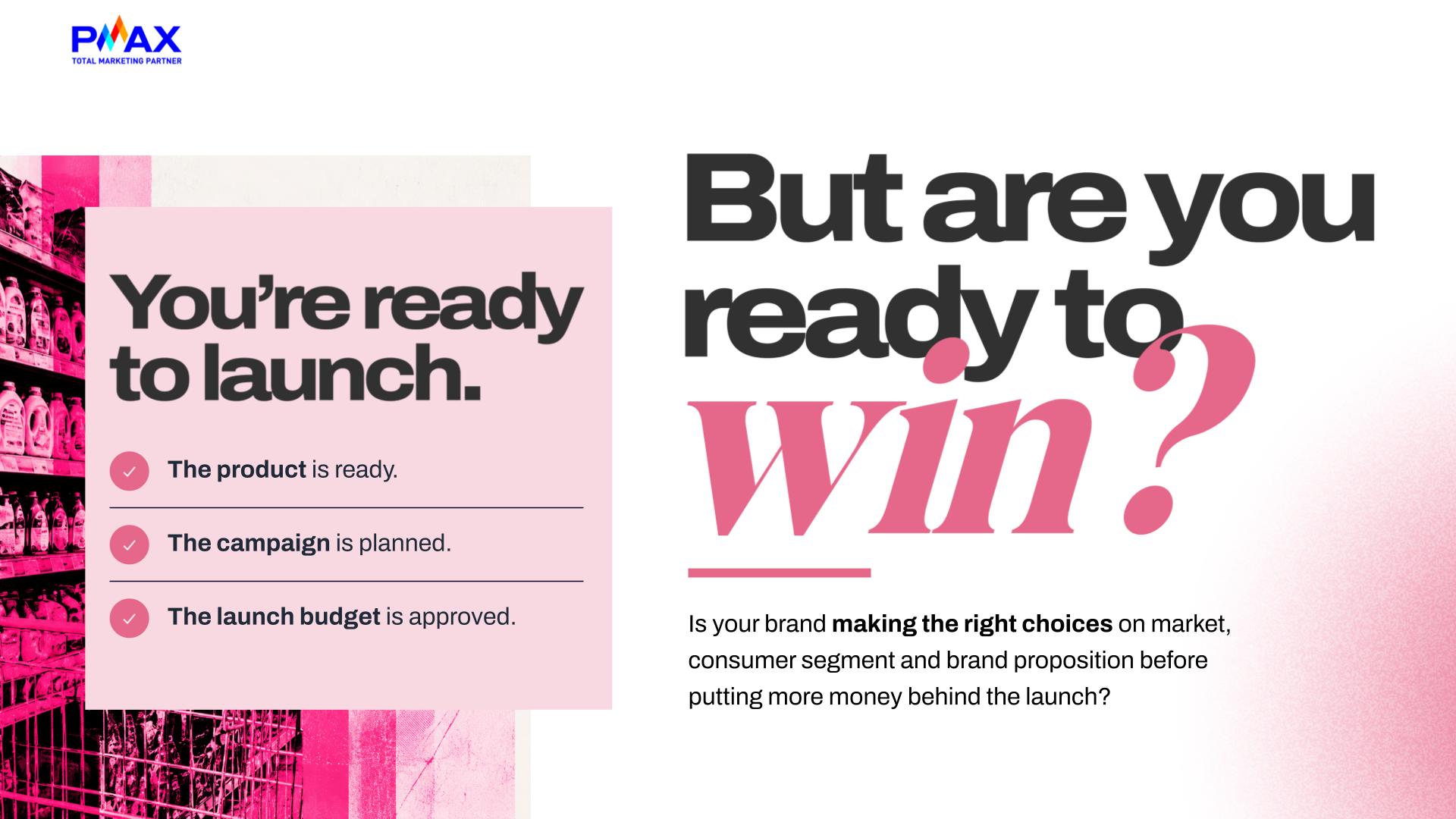 Being ready to launch does not mean being ready to win.
Trial is only the first step; Repeat purchase is the long-term growth challenge
Research on product launches highlights an important point: generating initial interest and sustaining demand must be addressed together. A strong launch-day response does not guarantee long-term growth.
Consider several findings on new product launch performance:
- According to NielsenIQ (NIQ, 2026), more than 3,500 new brands and sub-brands were launched across the United Kingdom, Germany, France, Italy, and Spain in 2025, but only around one-third reached 1% household penetration.
- A 2021 study published in Marketing Letters tracked 83,719 stock-keeping units (SKUs) introduced between 2002 and 2009 across 31 U.S. consumer packaged goods (CPG) categories. It found that around 25% were no longer being purchased one year after launch; that figure rose to approximately 40% after two years.
- NIQ (19 March 2025) also reported that only 50% of product innovations continued to grow in their second year after launch.
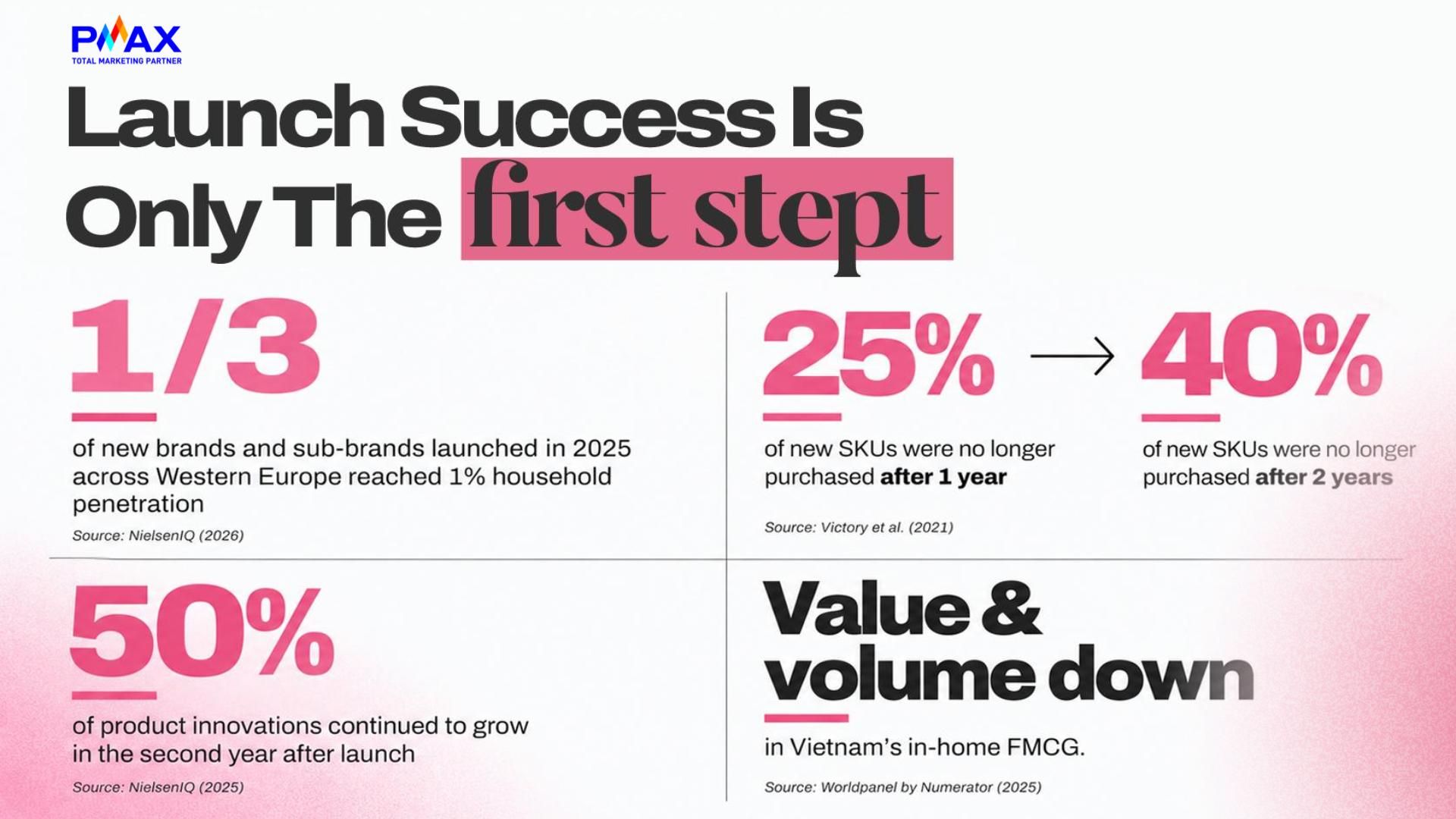 Launch success is only the first step: data from NielsenIQ, Victory et al. and Worldpanel by Numerator.
In Vietnam, Worldpanel by Numerator’s 2026 FMCG outlook reported that value growth in in-home FMCG had turned negative, with volumes declining in both urban and rural areas. This points to a more challenging context for household purchases.
A new product launch therefore needs to make clear how its value fits within the spending priorities of its target customers. Novelty may attract initial attention, but repeat purchases depend on the experience customers have and the value the product delivers.
Three Considerations for a New Product Launch
First, launch scale does not determine the likelihood of success. An ambitious launch may look compelling in theory, but it can require distribution, media, and operational resources beyond a brand’s capacity. The Marketing Letters study also found that failure risk was higher for launches in higher-revenue categories, particularly when introduced by parent brands with smaller market shares. Businesses should identify where customer needs are clear, assess what advantage the product offers in meeting those needs, and decide which channels provide the right starting point. Choosing focused starting points helps concentrate resources and makes early market feedback easier to interpret.
Second, a good product still needs a compelling reason to be chosen. A company’s product development team may understand its ingredients, technology, and features in detail. Buyers, however, tend to evaluate a new product by asking a more immediate question: “What problem does this solve for me?” “Good quality” becomes persuasive when it is explained through a specific benefit and supported by relevant evidence. The most valuable differentiation is something customers can recognize, care about, and want to try.
Third, marketing outcomes need to be measured alongside business results. Reach and engagement indicate how much attention a product launch campaign attracts. Businesses also need to know who tried the product, who bought it, and the cost of generating those behaviors. Worldpanel’s Brand Footprint Asia 2025 highlights the role of expanding the buyer base in brand growth. Taken together, trial, repeat purchase, and buyer penetration offer a more useful view of whether a launch is gaining traction and where investment may need to be refined.
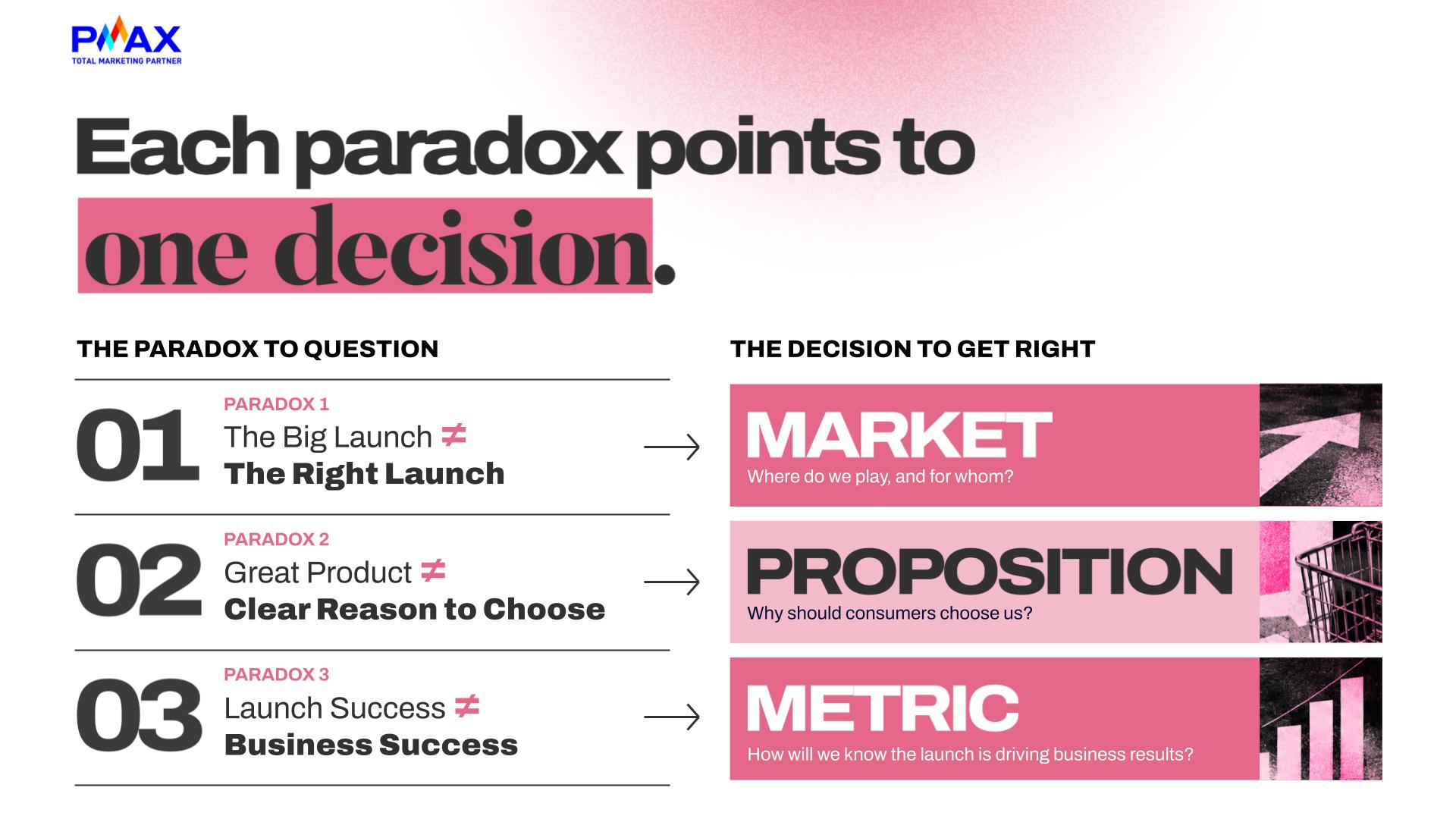 Three launch paradoxes, three decisions to get right: Market, Proposition, Metrics.
Bring three key decisions into one product launch plan
In the Branding to Commerce guidebook, we identify three decisions that should shape a new product launch strategy: Market, Proposition, and Metrics.
| Decision | Key question | Role in the plan |
| Market | Which markets and customer segments should we prioritize? | Focus on opportunities that match the brand’s capabilities. |
| Proposition | Why should customers choose this product? | Clarify the benefits, differentiation, and evidence that matter to buyers. |
| Metrics | What results would justify further investment? | Connect marketing response with demand, sales outcomes, and commercial efficiency. |
These decisions need to work together in one product launch plan. Market research helps identify the customer needs and purchase contexts to prioritize. The proposition should be supported by evidence showing how the product addresses those needs. A clear set of product launch metrics then helps the team monitor real consumer response and make informed decisions about investment in subsequent phases. “Before deciding how much to invest, a business needs to be clear about which choice it is backing.”
Branding to Commerce – Beyond Launch Day was developed by PMAX Total Marketing Partner in collaboration with Paula’s Choice Vietnam and commerce partner OGS. The initiative aims to help brands make informed strategic choices and execute product launch campaigns consistently around those choices. A strong product launch strategy starts with a clear target, a compelling reason to choose, measurable objectives, and consistent execution before the product enters the market.
About PMAX
Founded in 2016, PMAX is a Total Marketing Partner that works alongside businesses to build comprehensive marketing ecosystems, connecting internal resources and strategic partner networks to maximize marketing investment efficiency and create business impact for clients.
Building on its data-driven marketing foundation, PMAX has expanded its capabilities into Total Brand Communications, Total Lead Generation, Total Creator, Commerce Management, Application Solution, and Academy Solution.
With 10 years of experience, partnerships with over 700 brands, a team of more than 250 professionals, and over 40 domestic and international awards, including APAC Digital Agency of the Year and South East Asia Agency of the Year, PMAX is an official Premier Partner of Meta, Google, TikTok, Shopee, and others, continuing to affirm its role as a trusted growth partner for businesses in Vietnam and across the region.
References
NIQ (April 20, 2026). Launch Fast, Learn Faster. More than 3,500 brands/sub-brands launched in 2025 across five Western European markets. View source
NIQ (March 19, 2025). Beyond Vitality: Redefining CPG innovation for incremental growth. View source
Worldpanel by Numerator (2025). Brand Footprint 2025: Asia remains an FMCG growth hotspot. Highlights the role of expanding the buyer base. View source
Victory, K. et al. (2021). How common is new product failure and when does it vary? Marketing Letters, 32, 17–32. DOI: 10.1007/s11002-021-09555-x. US data, 2002–2009. View source