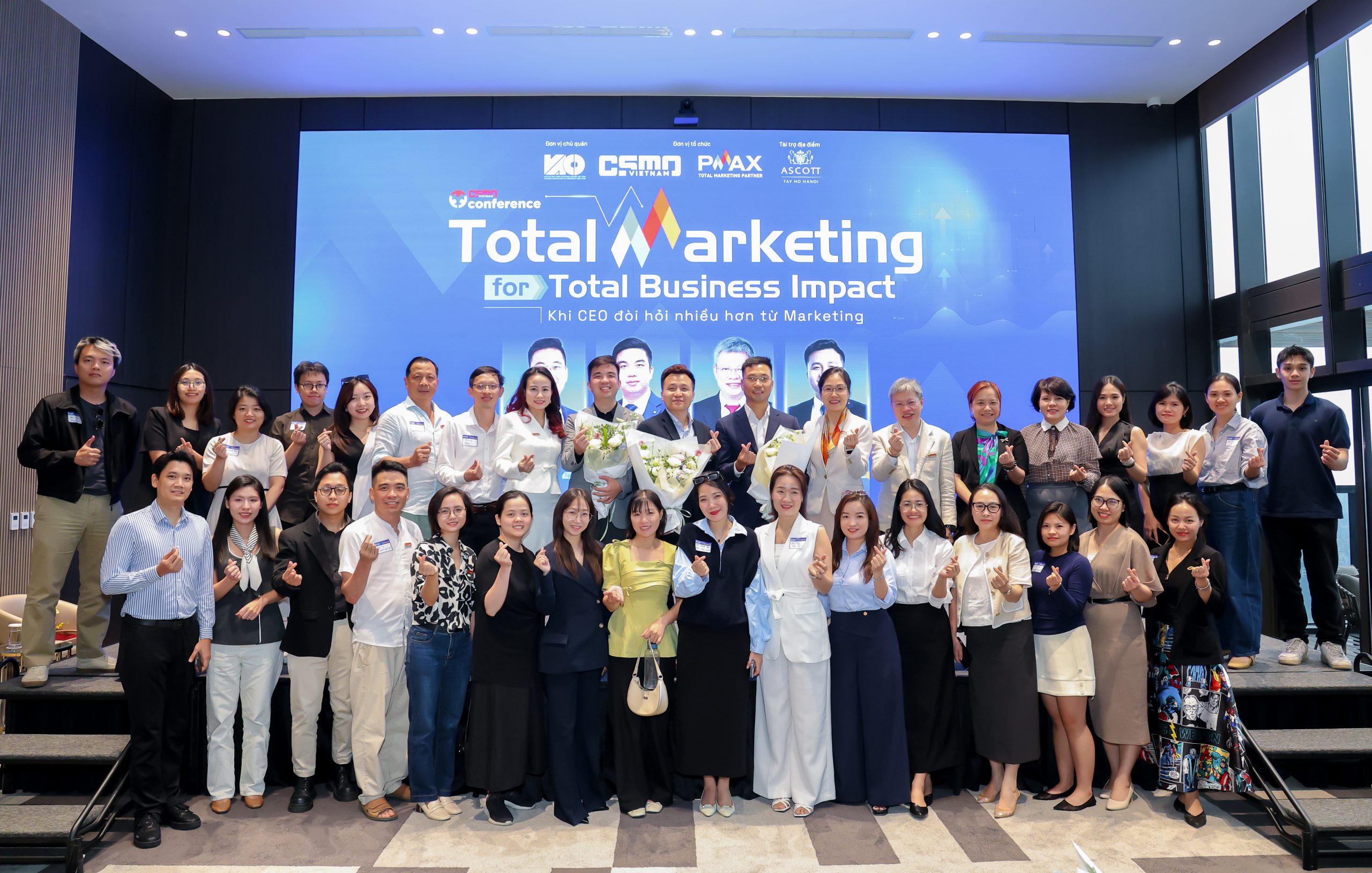
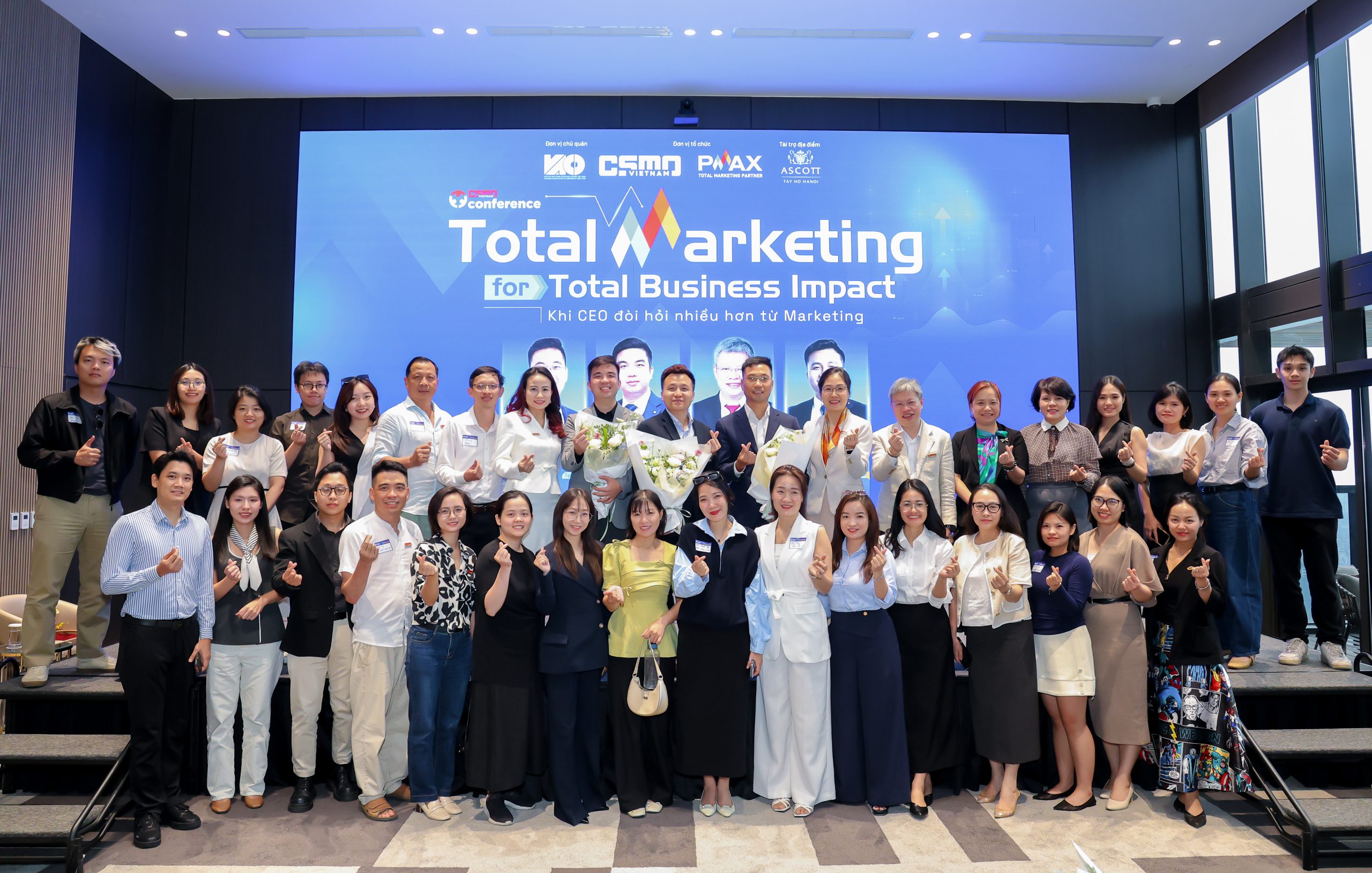
On July 24, 2026, in Hanoi, PMAX and CSMO Vietnam co-organized the “Total Marketing for Total Business Impact” seminar, bringing together more than 100 business leaders and marketing experts from the Northern region. The event focused on discussing an increasingly urgent challenge: how to make Marketing a competitive capability that creates a measurable impact on business performance and sustainable growth.
In many businesses, Marketing is still operated through separate functions such as Brand, Trade Marketing, Social Media, CRM, or Performance Marketing. Each department may successfully achieve its own objectives, but the overall results do not necessarily translate into proportionate growth.
Based on this reality, the seminar called for Marketing to be viewed not merely as a collection of communications activities, but as a Marketing operating system that connects strategy, organization, data, operations, and measurement.
Marketing Is Not the Problem, Marketing Management Is the Problem
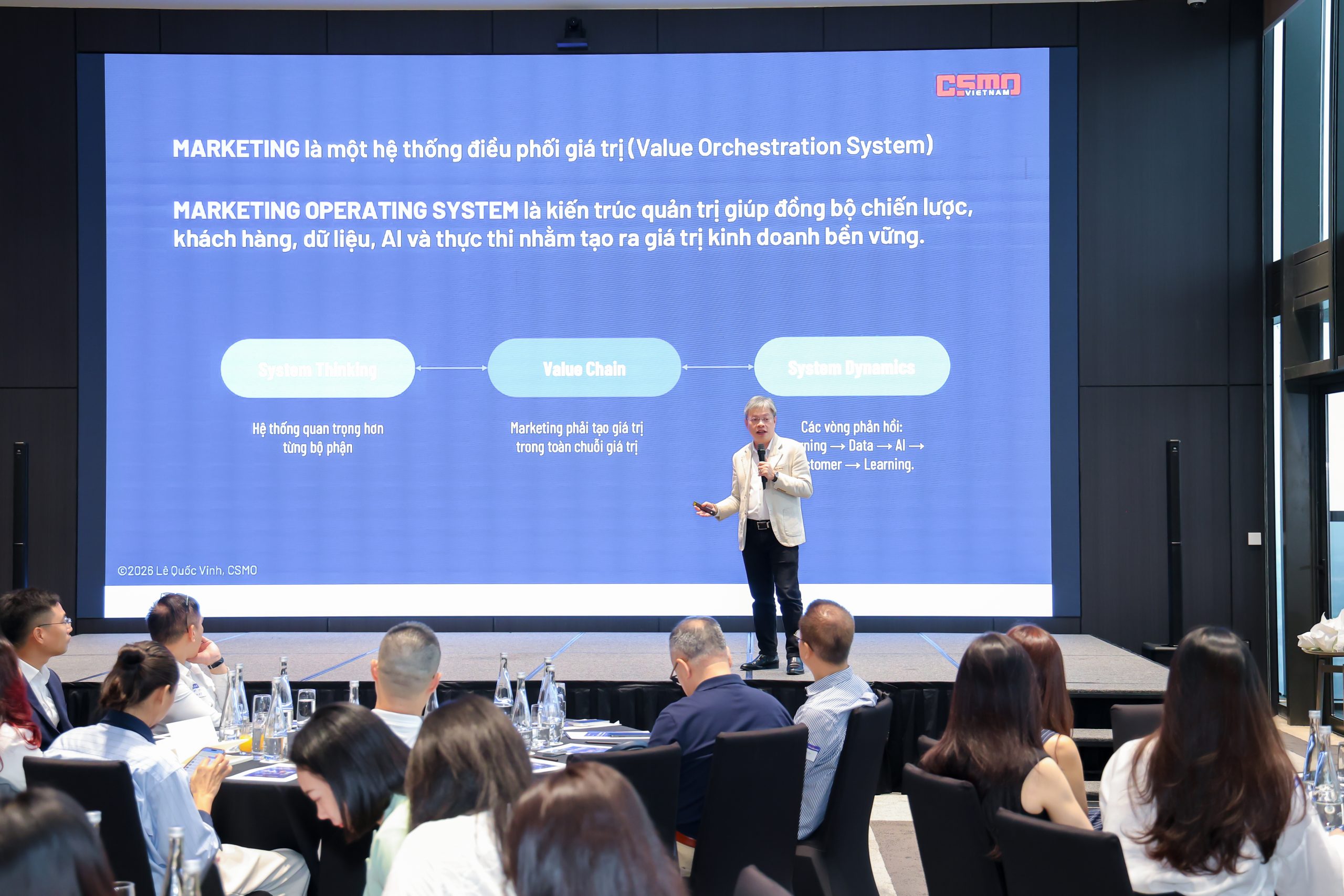
Opening the seminar, Mr. Le Quoc Vinh, Chairman of CSMO Vietnam, highlighted a common paradox: Marketing departments may achieve their individual targets, while the company’s overall business performance does not grow correspondingly.
“Marketing is not the problem. Marketing Management is the problem,” Mr. Vinh shared.
According to Mr. Vinh, many Vietnamese businesses still lack a unified Marketing Operating System for all Marketing activities.. When each department operates according to its own objectives, data sources, and evaluation mechanisms, the organization can easily fall into a situation where individual parts are optimized, but the overall results are not.
He also emphasized the shift in how businesses create competitive advantages. While competitive advantages may previously have come primarily from products, brands, or customer experience, in the new context, the ability to build a Marketing system that is closely connected to business strategy and capable of learning and continuously adjusting itself will become an increasingly important factor.
Marketing Must Begin with Business Strategy
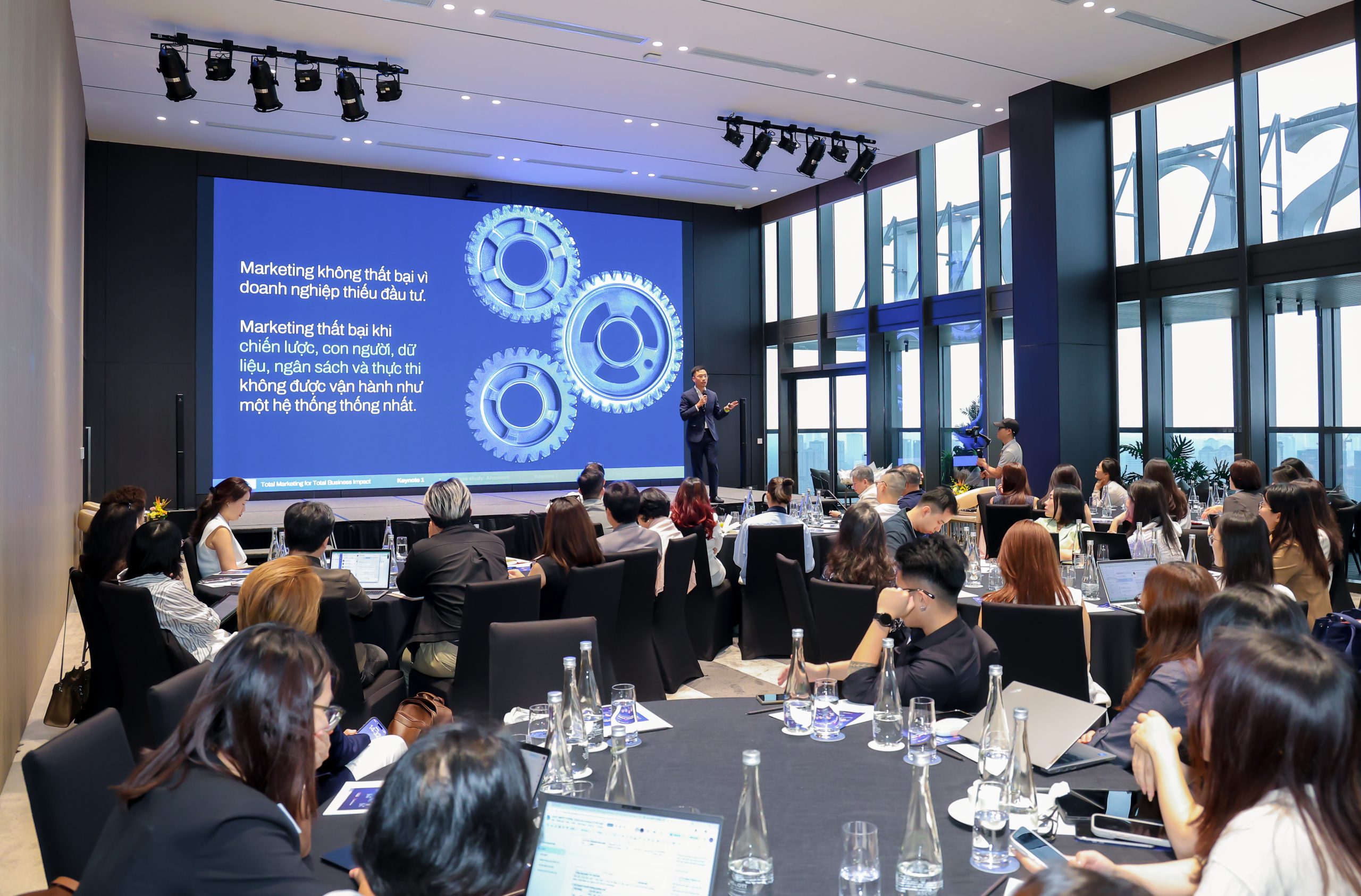
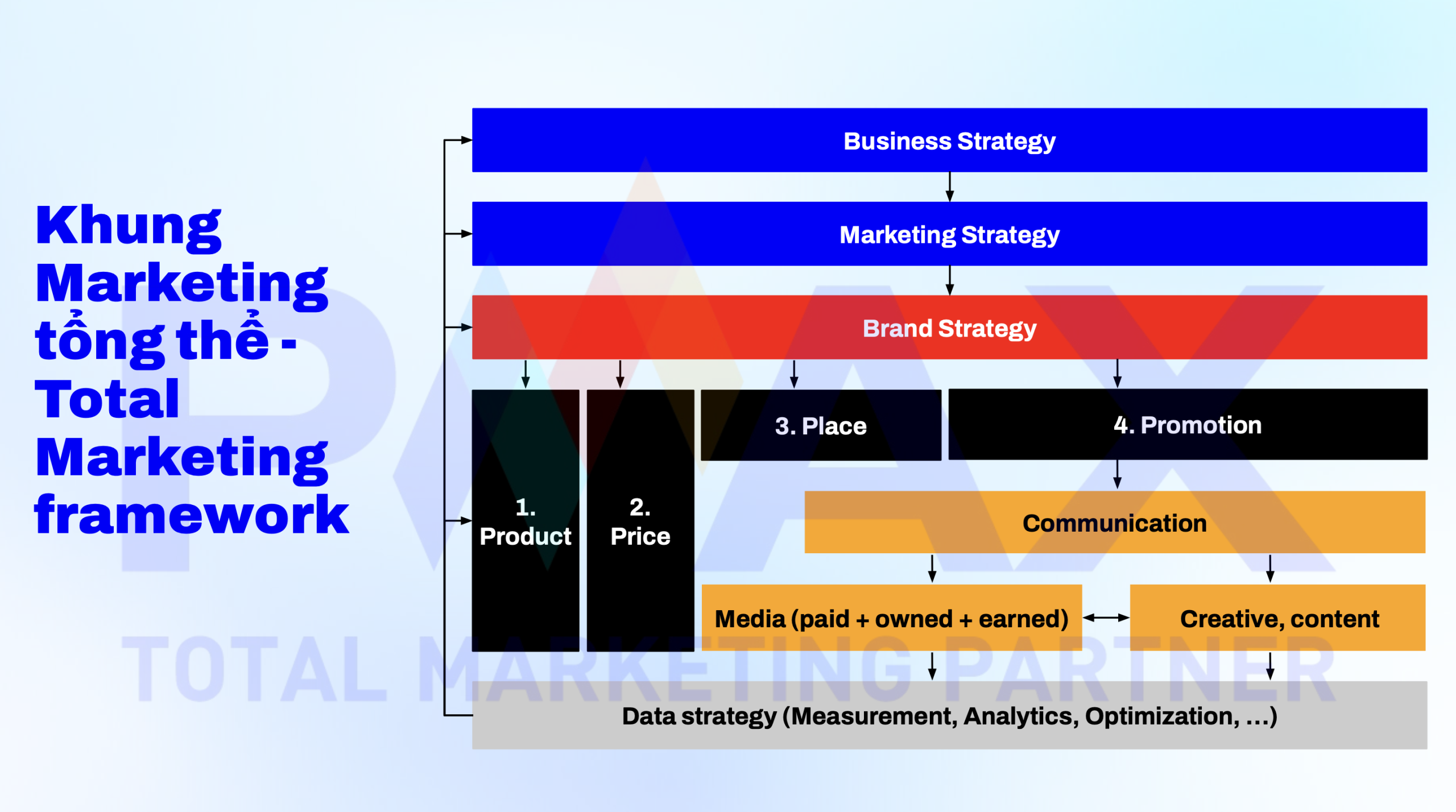
Building on the perspective above, Mr. Le Xuan Long, CEO of PMAX, presented a fundamental principle: an effective Marketing Operating System must begin with business strategy, which is then translated into Marketing strategy and brand strategy before being implemented through decisions related to product, price, distribution channels, and communications.
“In many businesses, the CMO or Head of Marketing often focuses most heavily on communications, while product, price, and distribution channels continue to be managed as separate components.”
According to Mr. Long, if Marketing is only involved in communications, businesses will find it difficult to create a comprehensive impact. Marketing needs to be connected throughout the value chain, from product research and manufacturing to distribution and after-sales, while also linking stakeholders within the ecosystem, such as suppliers, distributors, and buyers.
When organized as a system, Marketing can contribute to building competitive advantages across multiple dimensions:
- Strengthen the position of product quality and safety.
- Create cost advantages by optimizing the supply chain instead of competing solely on selling price.
- Build brand strength based on consistent experiences and a community of loyal customers.
This also marks an important shift: from viewing Marketing as a communications expense to managing Marketing as a capability that creates value for the entire business.
The Architecture of a Holistic Marketing Operating System
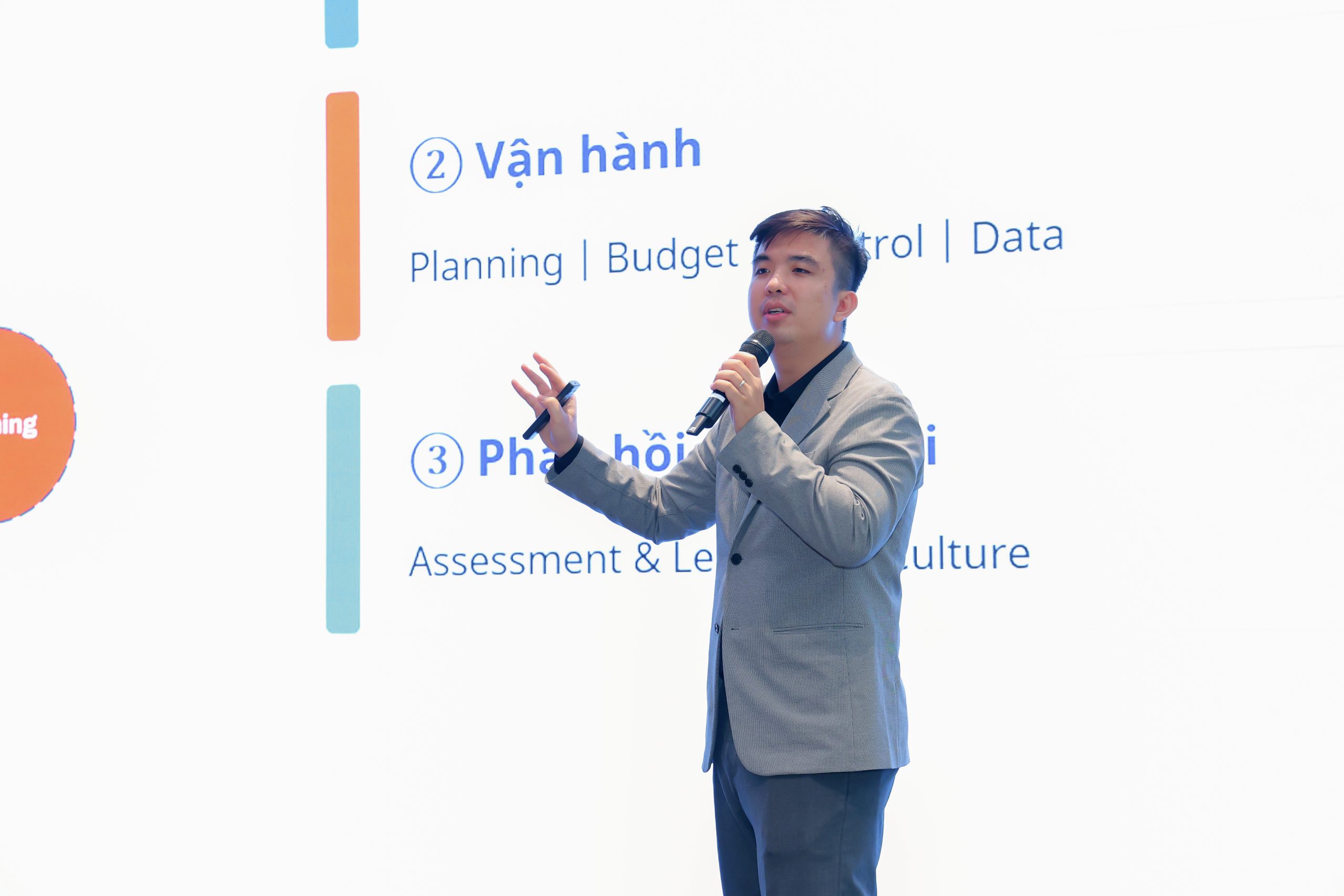
Mr. Nguyen Manh Cuong, Consulting Director at PMAX, presented the architecture of a complete Marketing operating system, organized into three capability groups:
- Direction: Establish business objectives, Marketing strategy, and investment priorities.
- Operations: Translate strategy into plans, budgets, resources, and coordination mechanisms.
- Evaluation and learning: Measure results, identify causes, and feed lessons back into the next decision-making cycle.
According to Mr. Cuong, many Vietnamese businesses still manage their Marketing plans and budgets through separate Excel or PowerPoint files. This approach makes it difficult to control progress, compare plans with actual performance, and create a unified view across the organization.
There is no single organizational model that suits every business. However, one principle that must be ensured is that data from the corporate, business unit, regional, and individual point-of-sale levels must be consolidated into a single source of reference. Only when departments look at the same data system can they coordinate and make decisions based on the same foundation.
Four Principles for Improving Marketing Investment Efficiency
A Marketing operating system only creates value when accompanied by discipline in resource allocation and measurement. At the seminar, Mr. Le Xuan Long shared four reference principles to help businesses improve the efficiency of budget utilization:
- Prioritize based on impact and resources: Focus first on initiatives with the potential to create significant impact but that do not require excessively high levels of investment or implementation effort.
- Identify the saturation point of each channel: Apply Marketing Mix Modeling to evaluate marginal efficiency, thereby limiting further budget increases once a channel has surpassed its optimal threshold.
- Balance brand building and sales activation: Refer to the 60/40 principle from the research of Les Binet and Peter Field, while adjusting it according to the industry, stage of development, and specific objectives of the business.
- Establish an investment portfolio for innovation: Allocate resources according to the 70/20/10 approach across core activities, expansion directions, and breakthrough experiments.
These ratios should not be applied as fixed formulas. The core value lies in businesses establishing an allocation mechanism with clear hypotheses, supporting data, and the ability to adjust continuously.
From Total Marketing Thinking to the Growth Operating System
At the seminar, PMAX introduced the Growth Operating System, a system of solutions developed to help businesses connect Marketing strategy with operational capabilities and business results.
The system comprises three capability layers:
1. Strategy and Governance
Identify the right business challenge, establish unified objectives and reporting systems, and measure the contribution of each channel and Marketing activity.
2. Integrated Operations
Connect media, content creation, and lead management within a seamless process, helping to reduce disconnections between departments and improve conversion efficiency throughout the customer journey.
3. Data and Technology
Use the PAXY technology platform as the infrastructure connecting Marketing and sales data, helping businesses gradually turn data into an accumulated asset. The system is supported by Audit Vista, a tool that helps monitor compliance with brand standards and is particularly suitable for businesses with large-scale distribution networks or points of sale.
Through these three capability layers, the Growth Operating System aims to address a core challenge: ensuring that strategy does not remain only in plans, implementation activities are not fragmented, and data genuinely feeds back into business decision-making.
Marketing Needs to Be Managed as an Enterprise Capability
The central message throughout the seminar was the shift from managing individual Marketing activities to building a unified management system in which business strategy, the 4Ps, organization, resources, data, and measurement are all directed toward a common growth objective.
When these components operate in alignment, Marketing becomes a capability that creates a competitive advantage at the enterprise level: building long-term brand value, creating a clear impact on business results, and establishing a continuous cycle of measurement, learning, and improvement. This is precisely the spirit of Total Marketing for Total Business Impact.
Learn more about Total Marketing for Total Business Impact: here
About PMAX
Founded in 2016, PMAX is a Total Marketing Partner that works alongside businesses to build a holistic Marketing ecosystem, connecting internal resources with a network of strategic partners to improve Marketing investment efficiency and create a tangible impact on business results.
From its foundation in data-driven marketing, PMAX has expanded its capabilities into strategic consulting, brand building, integrated communications, multi-platform media, e-commerce, KOL/creator ecosystems, data technology, and marketing science.
These capabilities are integrated into six solution groups:
- Total Marketing Consulting
- Total Brand Communications
- Total Media
- Total Lead Generation
- Total MCNs Powerhouse
- Data & Tech
After 10 years of operation, PMAX has worked with more than 700 brands, built a team of more than than 250 specialized professionals and a network of more than 50 industry-leading experts, while also being recognized with more than 40 domestic and international awards.
Contact us now for detailed consultation:
- Website: pmax.com.vn/contact-us
- Email: [email protected]
- Hotline: (+84) 28 7300 1778